Chinese by Topic
Chinese Festivals — Vocabulary, Greetings & Traditions
China’s traditional festivals follow the lunar calendar and are deeply tied to family, food, and ancestral customs. This guide covers the vocabulary, greetings, and cultural background for the most important Chinese holidays.
Spring Festival / Chinese New Year (春节)
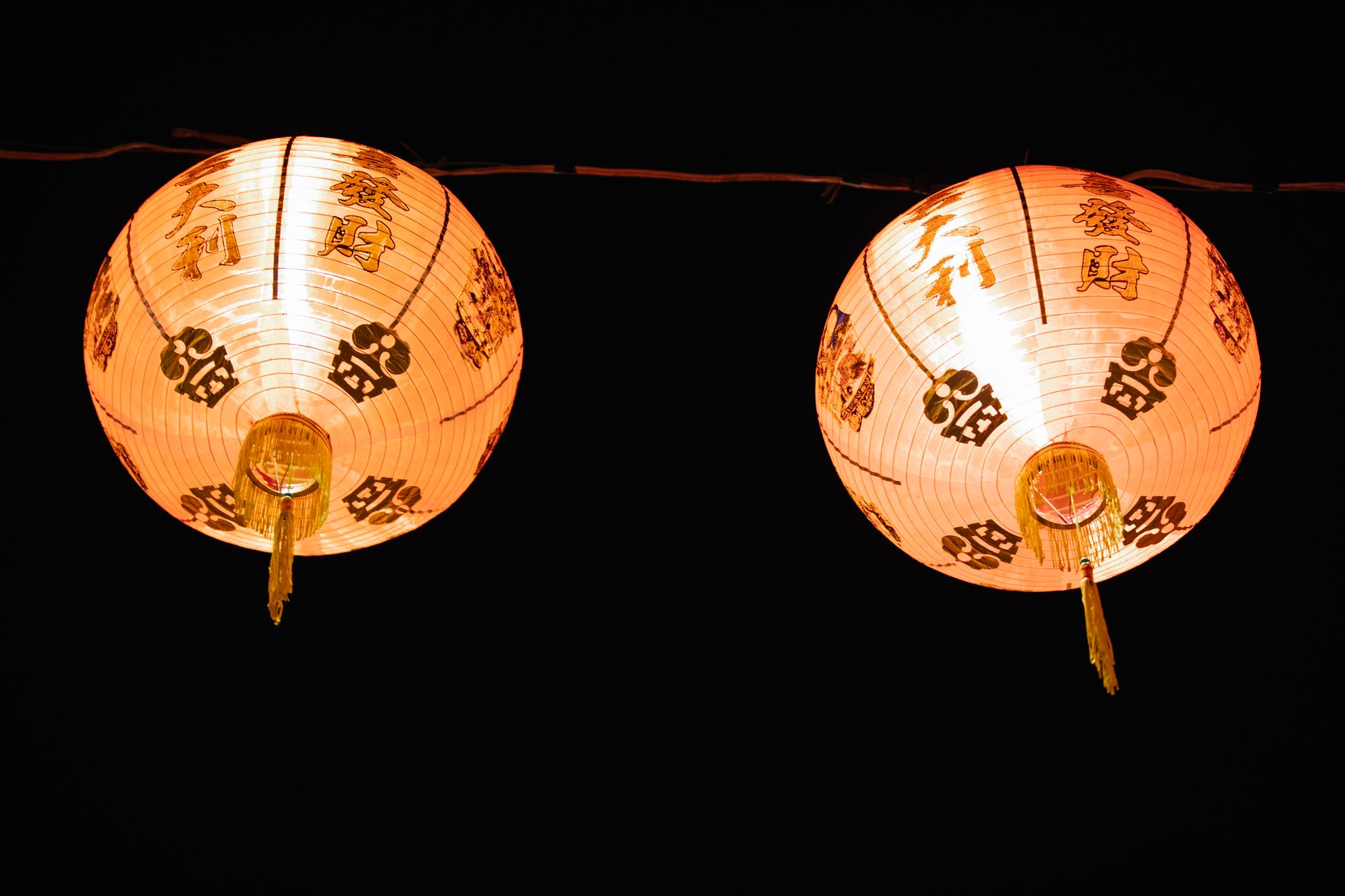
Chinese New Year (春节 Chūnjié) is the most important holiday in the Chinese calendar. It falls between late January and mid-February, lasts about 15 days, and culminates with the Lantern Festival. The entire country shuts down for at least a week as hundreds of millions of people travel home for family reunions — the annual migration known as 春运 (chūnyùn) is the largest human movement on Earth.
| Hanzi | Pinyin | English | Notes |
|---|---|---|---|
| 春节 | Chūnjié | Spring Festival / Chinese New Year | The biggest holiday in China |
| 除夕 | Chúxī | New Year's Eve | Family reunion dinner night |
| 年夜饭 | niányèfàn | New Year's Eve dinner | The most important meal of the year |
| 红包 | hóngbāo | red envelope (money gift) | Given to children and unmarried young people |
| 春联 | chūnlián | Spring Festival couplets | Red banners with auspicious phrases |
| 鞭炮 | biānpào | firecrackers | Banned in many cities now |
| 烟花 | yānhuā | fireworks | |
| 饺子 | jiǎozi | dumplings | Eaten at midnight in northern China |
| 年糕 | niángāo | New Year rice cake | Symbolises rising prosperity (年年高升) |
| 拜年 | bàinián | pay a New Year visit / send greetings | |
| 压岁钱 | yāsuìqián | New Year money (for children) | Money inside the 红包 |
| 福 | fú | good fortune / blessing | Often hung upside down (倒福 = 福到了) |
| 对联 | duìlián | couplet / paired scrolls | |
| 灯笼 | dēnglong | lantern | Red lanterns hung everywhere |
| 舞龙 | wǔlóng | dragon dance | |
| 舞狮 | wǔshī | lion dance | |
| 春运 | chūnyùn | Spring Festival travel rush | The world's largest annual migration |
Mid-Autumn Festival (中秋节)
The Mid-Autumn Festival falls on the 15th day of the 8th lunar month (usually September or October), when the moon is at its fullest and brightest. Families gather to eat mooncakes (月饼), gaze at the moon (赏月), and enjoy each other’s company. The round shape of the moon and mooncakes symbolises 团圆 (tuányuán) — family reunion and completeness.
| Hanzi | Pinyin | English | Notes |
|---|---|---|---|
| 中秋节 | Zhōngqiū Jié | Mid-Autumn Festival | 15th day of 8th lunar month |
| 月饼 | yuèbǐng | mooncake | Round pastry with various fillings |
| 月亮 | yuèliang | the moon | |
| 赏月 | shǎngyuè | admire / gaze at the moon | Core tradition of the festival |
| 团圆 | tuányuán | reunion / togetherness | The round moon symbolises family unity |
| 嫦娥 | Cháng'é | Chang'e (moon goddess) | Central figure in Mid-Autumn mythology |
| 灯笼 | dēnglong | lantern | Children carry lanterns at night |
Dragon Boat Festival (端午节)
The Dragon Boat Festival commemorates the death of Qu Yuan (屈原), a patriotic poet of the Warring States period who drowned himself in the Miluo River in protest against corruption. Locals raced boats to save him and threw rice into the river to keep fish from eating his body — giving rise to the traditions of dragon boat racing and eating 粽子 (zòngzi, sticky rice wrapped in bamboo leaves).
| Hanzi | Pinyin | English | Notes |
|---|---|---|---|
| 端午节 | Duānwǔ Jié | Dragon Boat Festival | 5th day of 5th lunar month |
| 粽子 | zòngzi | sticky rice wrapped in bamboo leaves | The signature food of this festival |
| 龙舟 | lóngzhōu | dragon boat | |
| 赛龙舟 | sài lóngzhōu | dragon boat race | |
| 屈原 | Qū Yuán | Qu Yuan (patriot poet) | The festival honours his memory |
| 艾草 | àicǎo | mugwort / wormwood | Hung on doors to ward off evil |
| 雄黄酒 | xiónghuáng jiǔ | realgar wine | Traditional drink believed to repel evil |
Other Major Festivals
Beyond the three major festivals above, China observes several other traditional holidays throughout the year. Each has its own food, customs, and significance rooted in the lunar calendar and ancestral traditions.
| Hanzi | Pinyin | English | Notes |
|---|---|---|---|
| 元宵节 | Yuánxiāo Jié | Lantern Festival | 15th day of 1st lunar month |
| 汤圆 | tāngyuán | glutinous rice balls in soup | Eaten at Lantern Festival |
| 猜灯谜 | cāi dēngmí | guess lantern riddles | Riddles written on lanterns |
| 清明节 | Qīngmíng Jié | Qingming Festival / Tomb Sweeping Day | Early April |
| 扫墓 | sǎomù | sweep tombs / visit graves | Pay respects to ancestors |
| 祭祖 | jìzǔ | worship / honour ancestors | Offerings of food and paper money |
| 重阳节 | Chóngyáng Jié | Double Ninth Festival | 9th day of 9th lunar month; elders' day |
| 七夕 | Qīxī | Qixi Festival (Chinese Valentine's Day) | 7th day of 7th lunar month |
| 冬至 | Dōngzhì | Winter Solstice Festival | Eating dumplings (north) or tāngyuán (south) |
Hungry Ghost Festival — Ghost Month (中元节)
The Hungry Ghost Festival falls on the 15th day of the 7th lunar month (usually August), when the gates of the spirit world are believed to open and the dead walk among the living for the entire month. While the festival exists across Chinese culture, it is observed with particular intensity in Singapore and Malaysia — arguably more visibly than in mainland China today, where official atheism has reduced public religious observance. If you grew up in Singapore, you know the smell of burning paper money, the sound of getai performances (歌台), and the rows of food and incense left on pavements throughout Ghost Month.
| Hanzi | Pinyin | English | Notes |
|---|---|---|---|
| 中元节 | Zhōngyuán Jié | Hungry Ghost Festival | 7th lunar month; huge in Singapore & Malaysia |
| 鬼月 | guǐ yuè | Ghost Month | The entire 7th lunar month |
| 普度 | pǔdù | public offering ceremony | Community feast for wandering spirits |
| 好兄弟 | hǎo xiōngdì | Good Brothers | Polite euphemism for hungry ghosts |
| 纸钱 | zhǐqián | paper money | Burned as offerings for the afterlife |
| 祭品 | jìpǐn | ritual offerings | Food, fruit, and incense left for spirits |
| 歌台 | gētái | getai (live stage performance) | Outdoor concerts for spirits and the living |
| 香 | xiāng | incense | Burned throughout Ghost Month |
| 路边 | lùbiān | roadside | Offerings are often burned at the roadside |
| 超度 | chāodù | to pray for the dead / release from suffering | Buddhist term used during Ghost Month rituals |
| 孤魂 | gūhún | wandering soul / lonely ghost | Spirit without a family to offer to it |
Ghost Month in Singapore & Malaysia — 5 Things to Know
- The entire 7th lunar month is considered Ghost Month (鬼月 guǐ yuè), not just the 15th. Superstitions vary — avoid swimming (drowned ghosts may pull you under), avoid moving house, avoid major decisions. These beliefs vary in how seriously individuals take them.
- Getai (歌台) performances are outdoor stage shows — music, comedy, and performances — put on for the community. The front row seats are left empty for the spirits. Getai is a distinctly Southeast Asian Chinese tradition with no equivalent in mainland China.
- The Hokkien community calls it "Phor Thor" (普度 pǔdù) and holds community feast offerings with tables piled high with food, drinks, and incense. The food is offered to wandering spirits first, then shared among the community.
- Burning paper offerings (纸钱 zhǐqián) has expanded far beyond paper money — paper iPhones, paper cars, paper houses, and paper Louis Vuitton bags are now commonly burned, sending luxury goods to the afterlife. This practice is viewed with some ambivalence by younger generations.
- The polite term for the ghosts is 好兄弟 (hǎo xiōngdì — "Good Brothers") — a way of showing respect to potentially dangerous spirits. Calling them "ghosts" or "demons" directly is considered bad manners and bad luck.
Festival Greetings & Phrases
Chinese festival greetings are formulaic and expected — knowing the right phrase for each occasion shows cultural awareness. The most famous is 恭喜发财 (Gōngxǐ fācái), used during Chinese New Year to wish someone wealth and prosperity.
新年快乐!
Xīnnián kuàilè!
Happy New Year!
恭喜发财!
Gōngxǐ fācái!
Wishing you prosperity! (classic CNY greeting)
万事如意!
Wànshì rúyì!
May everything go as you wish!
身体健康!
Shēntǐ jiànkāng!
Wishing you good health!
中秋快乐!
Zhōngqiū kuàilè!
Happy Mid-Autumn Festival!
月圆人团圆。
Yuè yuán rén tuányuán.
When the moon is full, families reunite.
端午安康!
Duānwǔ ānkāng!
Wishing you peace and health on Dragon Boat Festival!
节日快乐!
Jiérì kuàilè!
Happy holidays! (general festival greeting)
过年回家吗?
Guònián huíjiā ma?
Are you going home for New Year?
今年的年夜饭在哪里吃?
Jīnnián de niányèfàn zài nǎlǐ chī?
Where are you having New Year's Eve dinner this year?
你们那边怎么过中秋?
Nǐmen nàbiān zěnme guò Zhōngqiū?
How do you celebrate Mid-Autumn where you're from?
红包拿来!
Hóngbāo ná lái!
Hand over the red envelope! (playful, said by children)
How Diaspora Chinese Celebrate Differently
Chinese New Year without winter— In Singapore and Malaysia, Chinese New Year is celebrated in tropical heat. There is no snow, no heating, no thick red coats — but the red lanterns, lion dances, and visiting circuit (拜年 bàinián) are just as intense. The 拜年 house-visiting tradition is particularly strong in Singapore, where it is common to visit 10–15 households across the 15-day festival.
Chap Goh Mei (元宵节 in Penang)— The 15th day of Chinese New Year (Lantern Festival, 元宵节 Yuánxiāo Jié) is known in Penang as Chap Goh Mei (from Hokkien “15th night”). Unmarried women traditionally threw mandarins into the sea to attract a good husband. Today it is a social event along the waterfront — one of many uniquely Malaysian Chinese traditions.
Mooncake flavours reflect heritage— Singapore and Malaysian mooncakes lean heavily on Cantonese-influenced flavours — lotus paste (莲蓉 lián róng), red bean (红豆 hóngdòu), and salted egg yolk (咸蛋黄 xián dàn huáng). Snowskin mooncakes (冰皮月饼 bīngpí yuèbǐng) are a Singaporean innovation. Durian mooncakes are uniquely Southeast Asian.
Qingming in Malaysia and Singapore— Tomb-sweeping (扫墓 sǎomù) is taken seriously across the diaspora. In Singapore, families visit multi-tiered columbaria or ancestral burial hills. The Qingming weekend traffic jams near Bukit Brown (Singapore) or Batu Gajah (Malaysia) are a cultural institution. Offerings include the deceased’s favourite foods, not just traditional ritual items.
Cultural Notes on Chinese Festivals
- The Chinese lunar calendar (农历 nónglì) determines festival dates, which is why they shift on the Western calendar each year. Chinese New Year can fall anywhere between January 21 and February 20. The government publishes the official holiday schedule months in advance.
- Red (红色 hóngsè) is the colour of luck, joy, and prosperity in Chinese culture. During Spring Festival, everything turns red — door couplets, lanterns, envelopes, decorations. The character 福 (fú, meaning 'fortune') is often hung upside down because 倒 (dào, 'upside down') sounds like 到 (dào, 'to arrive'), creating the pun 'fortune has arrived'.
- Food is central to every Chinese festival, and each dish carries symbolic meaning. Dumplings (饺子) resemble ancient gold ingots (prosperity). Fish (鱼 yú) sounds like 余 (yú, 'surplus'). Noodles (长寿面 chángshòu miàn) represent long life. Tangyuan (汤圆) represent family unity because 圆 means 'round / complete'.
- The Qingming Festival (清明节) is one of the most solemn occasions in the Chinese calendar. Families visit ancestral graves, clean the tombstones, offer food and paper money, and burn incense. In recent years, digital tomb-sweeping services have emerged for people who cannot travel home.
- Modern China also celebrates Western-influenced holidays like Valentine's Day (情人节 Qíngrén Jié) and Christmas (圣诞节 Shèngdàn Jié) — mainly as commercial events in cities. But the traditional festivals remain far more culturally significant and are the occasions when the entire country stops working to be with family.